Small offices and professional suites
Plan desks, task chairs, filing cabinets, bookshelves and boxed files. Include shared spaces such as meeting rooms and staff kitchens so the quote covers the whole office.


A business relocation brings furniture, people, premises and deadlines together. Bay City Removals provides office moving and commercial furniture transport across South East Queensland, helping you organise the physical relocation around the way your workplace operates.
From a small office move to a larger collection of desks, cabinets and packed business contents, we’ll discuss the inventory, building access and delivery layout with you. The goal is straightforward: know what is moving, prepare it properly and get it to the right place at the new premises.

Plan desks, task chairs, filing cabinets, bookshelves and boxed files. Include shared spaces such as meeting rooms and staff kitchens so the quote covers the whole office.
Use a room or workstation inventory to organise desks, storage, meeting tables and other furniture. Note items that need dismantling and the intended layout at the destination.
Identify freestanding furniture, display pieces, cartons and other suitable contents. Fitted installations, clinical equipment and unusually delicate items need their requirements discussed separately.
Separate packed stock and office furniture from heavy equipment, machinery and racking. List dimensions and weights where known so the scope can be assessed before booking.
Choose one person to coordinate the moving arrangements and another contact at the destination if needed. A single inventory and clear point of contact help avoid conflicting instructions as staff prepare their areas.
Start with the fixed constraints: lease handovers, building moving hours, lift bookings and when staff need their workspaces available. Then establish what can be packed in advance and which items must remain in use until the last practical moment. Archive boxes and spare furniture may have different priorities from the equipment used every day.
A simple floor plan can save considerable sorting at delivery. Give rooms or departments short labels and use the same labels on furniture and cartons. Mark reception, meeting rooms and priority workstations clearly so the crew can place items where they belong.
After-hours, weekend or staged moves can be discussed according to availability and building access. A proposed timing option becomes part of the job only when it is agreed in the booking.
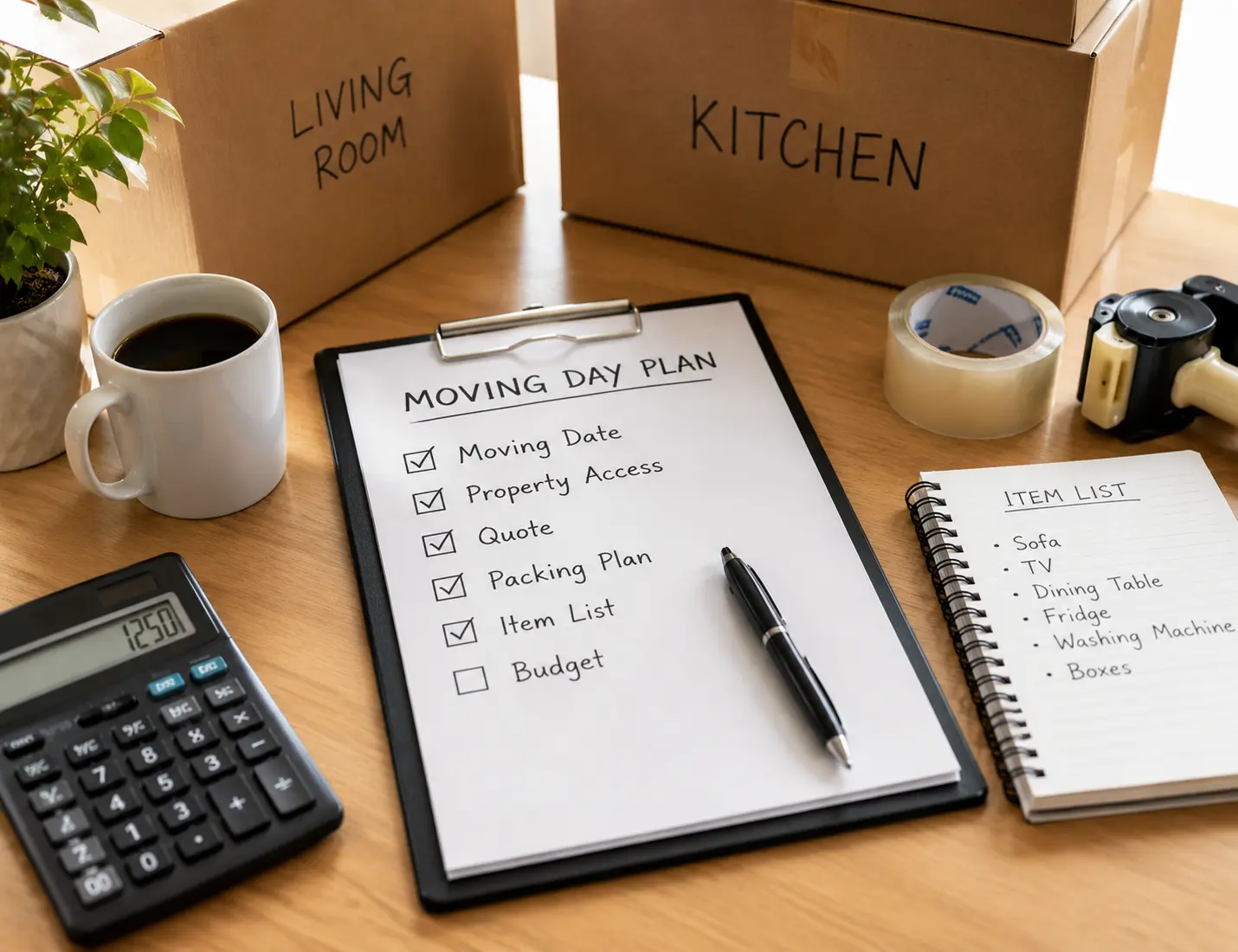
Our packing assistance can help with suitable office contents, including boxed supplies and items needing protective preparation. Agree who is packing each area and which materials are needed. Keep confidential records secure and follow your business’s own process for sensitive information.
Desks, meeting tables and shelving may need dismantling. Identify the furniture involved, retain instructions and label fittings for the relevant item. Include any requested reassembly in the quote, and check that the new layout has sufficient space before delivery.
Computers, monitors and other electronics need appropriate packing and clear responsibility for disconnection and reconnection. Arrange backups and coordinate IT tasks with your provider or responsible staff member. Furniture transport should not be treated as a substitute for an IT migration plan.
For oversized, heavy or fragile equipment, provide photographs, dimensions, weight information and any handling instructions. Our special item transport service can help establish what requires assessment.
Business premises can have very different access conditions from a home. Ask the building managers at both sites about loading dock bookings, lift sizes, vehicle clearances, moving hours and any required protection of shared areas.
For warehouse and stockroom enquiries, describe the stock packaging, shelving and equipment separately. Our Brisbane warehouse relocation support page covers that scope. Machinery moves, racking work and specialist lifting require explicit assessment rather than being assumed within an office furniture booking.

We welcome office relocation enquiries in Brisbane and throughout South East Queensland, including Caboolture, Redcliffe and the wider Moreton Bay region. Our Brisbane moving services page provides broader local information.
For premises in Redland City, the Gold Coast, Sunshine Coast or Toowoomba, share both addresses and the proposed move date. Our South East Queensland removalists can discuss cross-region business furniture moves as well as local relocations.
When the move covers more than one site, list the contents and timing for each collection. Clearly marked destination groups help the loading order match the delivery plan.
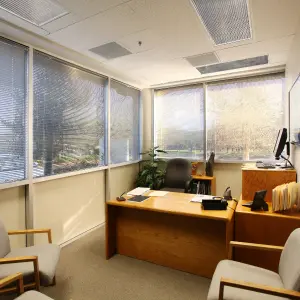
Send a furniture and carton inventory, the two addresses, floor levels, access arrangements and your preferred schedule. Include packing, dismantling, reassembly, extra stops and any items requiring individual assessment. Photographs or a floor plan can make the scope easier to explain.
Ask how travel, loading, unloading and waiting are charged, and how changes to the inventory are handled. Comparing commercial removal companies is more useful when each is quoting the same work and responsibilities.
At delivery, have a nominated person available to direct placement and check the inventory. Keep IT setup, stock checks and staff readiness in your wider relocation plan. These tasks help your business resume work after the physical move is complete.
Bay City Removals is a family-owned business. We offer a direct discussion about your workplace relocation and a free quote based on the scope you need.
Review the moving terms and discuss cover for your commercial contents, including any particularly valuable or fragile items.
Ask about those options when enquiring. Availability, building access and the size of the job determine what can be arranged. Confirm the timing and any applicable pricing in the booking.
IT work needs a separate, explicit arrangement with your responsible staff member or provider. Identify electronics that need transport and agree how they will be prepared, but do not assume furniture movers are providing network migration or technical setup.
Discuss which items need to move at each stage and the access windows involved. If a staged arrangement is suitable, the separate collections, deliveries and costs should be documented in the quote.
Use the destination room, department or workstation label from your floor plan. Apply that system consistently to furniture and cartons, and keep fittings labelled with the item they belong to.
Include it in your enquiry with quantities, packaging, dimensions and weight information where available. The team needs to assess the full load and access. Machinery, racking and specialist industrial handling are separate scope questions.
Send your premises details, preferred timing and furniture inventory. We’ll help you define the physical move and prepare a commercial moving quote.
Your trusted removalist company, providing reliable and professional moving services across South East Queensland.
© 2025 Bay City Removals - All Rights Reserved - Designed by